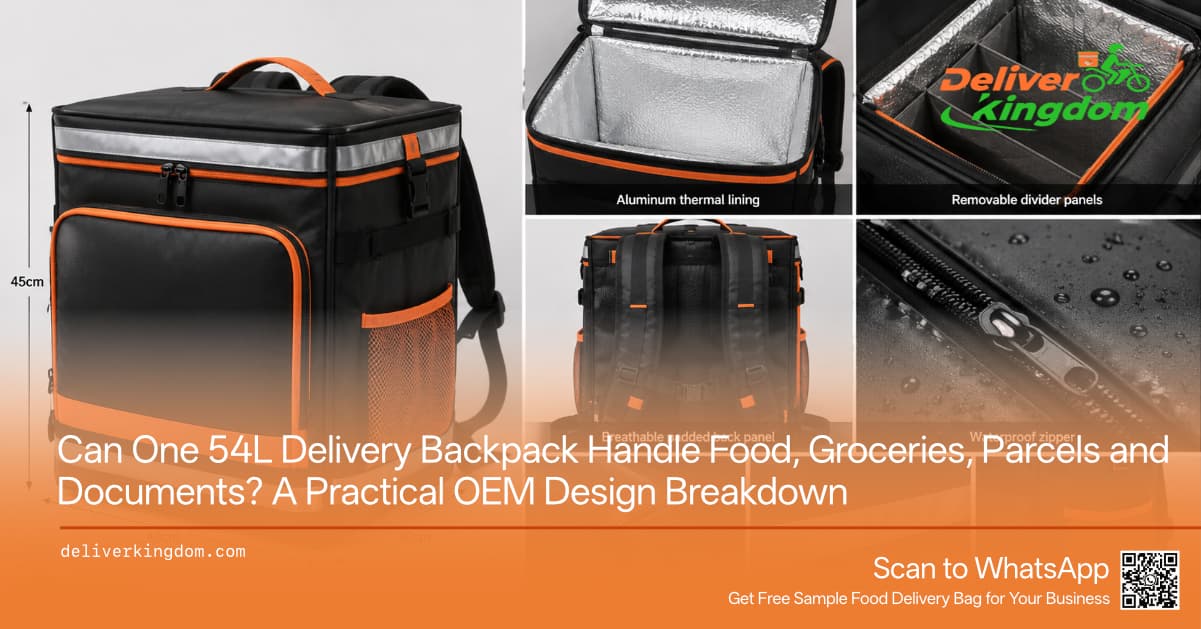
ขนาด 45 × 40 × 30 ซม. หมายถึงความจุที่ใช้งานได้จริง 54 ลิตรหรือไม่?
คำถามจากลูกค้า OEM เมื่อเร็วๆ นี้ต้องการกระเป๋าเป้จัดส่งระดับมืออาชีพที่มีขนาด 45 × 40 × 30 ซม. โดยคาดหวังความจุประมาณ 54 ลิตร ในทางคณิตศาสตร์ถือว่าสมเหตุสมผล: 45 × 40 × 30 ซม. ให้ปริมาตรทรงสี่เหลี่ยมที่ 54,000 ลูกบาศก์เซนติเมตร หรือ 54 ลิตร แต่ทีมจัดซื้อควรระมัดระวังตัวเลขนี้ หาก 45 × 40 × 30 ซม. หมายถึงขนาดภายนอก ปริมาตรภายในที่ใช้งานได้จริงมักจะน้อยกว่านั้นเมื่อรวมฉนวนกันความร้อน ซับในอะลูมิเนียม แผงรองรับโครงสร้าง ตะเข็บ โครงสร้างซิป และความหนาของผนังกระเป๋า ดังนั้นกระเป๋าเป้จัดส่งขนาด 54 ลิตรแบบสั่งทำพิเศษจึงต้องการการชี้แจงที่สำคัญหนึ่งประการก่อนการทำตัวอย่าง: ขนาดที่ต้องการนั้นเป็นขนาดภายนอก หรือพื้นที่บรรจุภายในต้องใกล้เคียงกับ 45 × 40 × 30 ซม.? ความแตกต่างนั้นส่งผลต่อรูปแบบทั้งหมด สำหรับกล่องใส่อาหาร ของชำ และพัสดุ แม้แต่การสูญเสียพื้นที่ไป 20–30 มม. ในหลายด้านก็อาจตัดสินได้ว่ากล่องที่ตั้งใจจะใส่จะวางได้พอดีหรือไม่ ที่ DeliverKingdom การพัฒนาด้าน มิติควรเริ่มต้นจากสิ่งของที่จะขนส่ง ไม่ใช่แค่ตัวเลขความจุเพียงอย่างเดียว การระบุขนาดของกล่องใส่อาหารทั่วไป ถุงของชำ หรือพัสดุ จะช่วยให้ทีมผลิตตรวจสอบพื้นที่บรรจุภายในได้ก่อนที่จะมีการทำต้นแบบ
ผ้าใบ PVC 500D เป็นวัสดุที่ดีสำหรับงานจัดส่งสินค้าประจำวันหรือไม่?
กระเป๋าเป้จัดส่ง PVC 500D เป็นจุดเริ่มต้นที่สมเหตุสมผลสำหรับการใช้งานจัดส่งเชิงพาณิชย์ เนื่องจากวัสดุมีความสมดุลที่เป็นประโยชน์ระหว่างความทนทานต่อการเสียดสี การกันน้ำ ความง่ายในการทำความสะอาด และน้ำหนัก อย่างไรก็ตาม ในทางปฏิบัติควรนิยามคำว่า “ผ้าใบ / PVC 500D” ให้ชัดเจนยิ่งขึ้นก่อนการผลิต ผู้ซื้ออาจหมายถึงผ้าพื้นโพลีเอสเตอร์ 500D ที่เคลือบด้วย PVC ในขณะที่วัสดุเคลือบ PVC แต่ละชนิดอาจมีความแตกต่างกันอย่างเห็นได้ชัดในด้านผิวสัมผัส ความแข็ง น้ำหนักการเคลือบ และความรู้สึกเมื่อสัมผัส สำหรับกระเป๋าเป้จัดส่งที่เสริมความแข็งแรงสำหรับอาหารและพัสดุ วัสดุภายนอกต้องทนต่อการสัมผัสซ้ำๆ กับแร็คจักรยานยนต์ ผนัง พื้น ฝน และการบรรจุของในแต่ละวันโดยไม่ทำให้กระเป๋าเป้ทั้งใบแข็งจนเกินไป ผ้าใบที่แข็งมากอาจดูทนทาน แต่อาจไม่สบายเมื่อสะพายบนหลังของผู้ขับขี่ โครงสร้างที่เบากว่าอาจพับเก็บได้ดีกว่า แต่อาจต้องการการเสริมความแข็งแรงที่ด้านล่างและจุดรับน้ำหนักมากขึ้น นี่คือเหตุผลที่การเลือกวัสดุควรสัมพันธ์กับ น้ำหนักบรรทุกและวิธีการขนส่งที่คาดหวังในแต่ละวัน DeliverKingdom สามารถปรับแต่งสเปกผ้า การเคลือบ สี และวัสดุเสริมความแข็งแรง จากนั้นยืนยันผลลัพธ์สุดท้ายผ่านตัวอย่างจริง แทนที่จะถือว่า “PVC 500D” เป็นข้อกำหนดทางวิศวกรรมที่สมบูรณ์ในตัวเอง
กระเป๋าเป้เก็บอุณหภูมิใบเดียวสามารถขนส่งอาหาร ของชำ พัสดุ และเอกสารได้หรือไม่?
นี่คือจุดที่โครงการนี้น่าสนใจยิ่งขึ้น กระเป๋าเป้ที่ต้องการไม่ได้มีไว้เพื่อเป็นกระเป๋าจัดส่งอาหารเพียงอย่างเดียว แต่อาจใช้ขนส่งอาหารสั่งกลับบ้านในเส้นทางหนึ่ง ของชำในอีกเส้นทางหนึ่ง และพัสดุหรือเอกสารในภายหลังของวัน ซับในอะลูมิเนียมเก็บอุณหภูมิมีประโยชน์สำหรับอาหารและคำสั่งซื้อของชำที่ไวต่ออุณหภูมิ แต่ช่องเก็บอุณหภูมิที่เปิดโล่งตลอดเวลาอาจไม่เหมาะสำหรับพัสดุขนาดเล็กและเอกสาร กล่องอาจเลื่อนไปมา เอกสารอาจงอ และพื้นที่ภายในอาจจัดระเบียบได้ยากขึ้นเมื่อสินค้าประเภทต่างๆ ใช้ช่องเก็บของขนาดใหญ่ร่วมกัน ด้วยเหตุนี้ กระเป๋าเป้จัดส่งขนาด 54 ลิตรแบบสั่งทำพิเศษสำหรับงานจัดส่งที่หลากหลายอาจได้รับประโยชน์จากแผ่นกั้นที่ถอดออกได้ ซองใส่เอกสาร หรือซับในภายในที่ถอดออกได้ ขึ้นอยู่กับรูปแบบการใช้งาน หากการจัดส่งอาหารเป็นงานหลักในแต่ละวัน โครงสร้างเก็บอุณหภูมิสามารถคงอยู่ถาวรและเพิ่มการจัดระเบียบผ่านแผ่นกั้นได้ หากงานพัสดุมีความสำคัญไม่แพ้กัน ต้นแบบควรทดสอบว่ากระเป๋าสามารถ เปลี่ยนจากการขนส่งอาหารแบบเก็บอุณหภูมิไปสู่การใช้งานจัดส่งทั่วไปได้รวดเร็วเพียงใด ข้อดีของโครงการ OEM คือสิ่งนี้: กระเป๋าไม่จำเป็นต้องทำหน้าที่เหมือนกระเป๋าใส่อาหารทั่วไปที่ติดโลโก้ในภายหลัง โครงสร้างของมันสามารถพัฒนาขึ้นโดยรอบการผสมผสานที่แท้จริงของการจัดส่งอาหาร ของชำ และอีคอมเมิร์ซ
กระเป๋าเป้จัดส่งขนาด 54 ลิตร ต้องการการเสริมโครงสร้างมากน้อยเพียงใด?
“โครงสร้างเสริมความแข็งแรงเพื่อคงรูปทรงของกระเป๋า” เป็นหนึ่งในข้อกำหนดที่สำคัญที่สุดในการสอบถามประเภทนี้ แต่ก็ต้องการการตีความอย่างระมัดระวัง กระเป๋าเป้ขนาด 45 × 40 × 30 ซม. มีแผงผนังค่อนข้างใหญ่ เมื่อบรรจุของเพียงครึ่งเดียว ด้านข้างที่ไม่มีการรองรับอาจยุบตัวเข้าด้านใน ทำให้การบรรจุของทำได้ยากและปล่อยให้พัสดุเคลื่อนที่ได้ การเพิ่มแผงรองรับที่ด้านล่าง ด้านหน้า ด้านหลัง และผนังด้านข้างสามารถคงรูปทรงสี่เหลี่ยมที่สวยงามและปกป้องสิ่งของภายในได้ ข้อแลกเปลี่ยนคือเรื่องน้ำหนักและความสามารถในการพับเก็บ หากทุกแผงมีความแข็งถาวร กระเป๋าเป้จะเริ่มทำตัวเหมือนกล่องและใช้พื้นที่จัดเก็บเต็มที่แม้ในขณะว่างเปล่า สำหรับกระเป๋าเป้จัดส่งที่เสริมความแข็งแรงสำหรับอาหารและพัสดุ วิธีแก้ปัญหาที่ใช้งานได้จริงมากกว่าอาจเป็นแผงรองรับที่ถอดออกได้หรือกึ่งแข็งในบางพื้นที่ โดยเฉพาะที่ฐานและผนังด้านข้างหลัก สิ่งนี้ช่วยให้กระเป๋าเป้มีรูปทรงเพียงพอสำหรับการวางซ้อนกล่องอาหารและพัสดุ ในขณะที่ยังคงความสามารถในการทำให้แบนราบเพื่อการขนส่งหรือจัดเก็บได้บ้าง ขั้นตอน การทำตัวอย่างควรทดสอบกระเป๋าทั้งในขณะที่บรรจุเต็มและบรรจุบางส่วน โครงสร้างที่ดูน่าประทับใจเมื่อยัดด้วยโฟมสำหรับการถ่ายภาพอาจมีพฤติกรรมที่แตกต่างออกไปมากเมื่อผู้ขับขี่บรรจุเพียงกล่องอาหารสามกล่องและพัสดุสองชิ้นในระหว่างการจัดส่งจริง
ซิปกันน้ำ การป้องกันฝน และรายละเอียดที่ผู้ซื้อมักมองข้าม
ผู้ซื้อมักขอ “ซิปกันน้ำสำหรับงานหนัก” แต่ระดับการป้องกันน้ำที่แน่นอนนั้นควรค่าแก่การอภิปราย ระบบซิปกันน้ำเต็มรูปแบบอาจมีราคาแพงกว่า แข็งกว่าในการใช้งาน และบางครั้งก็ไม่จำเป็นสำหรับงานจัดส่งในเมืองทั่วไป ในการใช้งานจัดส่งหลายประเภท ซิปกันน้ำคุณภาพสูงที่รวมเข้ากับแผ่นปิดกันฝนและผ้าภายนอกที่กันน้ำได้สามารถให้ความสมดุลที่ดีกว่าระหว่างการป้องกันสภาพอากาศ ความเร็วในการเปิด และต้นทุน ทางเลือกที่เหมาะสมขึ้นอยู่กับว่ากระเป๋าเป้จัดส่งขนาด 54 ลิตรแบบสั่งทำพิเศษนั้นคาดว่าจะต้องเผชิญกับฝนเป็นครั้งคราว การใช้งานบนรถจักรยานยนต์เป็นประจำ หรือการใช้งานในสภาพอากาศเปียกชื้นอย่างรุนแรง น้ำยังสามารถเข้าผ่านจุดที่ผู้ซื้อมักไม่สังเกตเห็น เช่น รูเข็มเย็บ ช่องเปิดกระเป๋า รอยต่อแผง และก้นกระเป๋า ดังนั้นกระเป๋าเป้จัดส่ง PVC 500D จึงต้องได้รับการประเมินเป็นโครงสร้างที่สมบูรณ์ แทนที่จะตัดสินประสิทธิภาพการกันน้ำจากซิปเพียงอย่างเดียว DeliverKingdom สามารถพัฒนาการจัดวางซิปแบบมีฝาปิด ตะเข็บเสริมความแข็งแรง และ แผงภายนอกที่เคลือบผิว ในขณะที่ต้นแบบจะเปิดโอกาสให้ผู้ซื้อตรวจสอบความต้านทานในการเปิดและการป้องกันฝนก่อนการผลิตจำนวนมาก เป้าหมายไม่ใช่การไล่ตามสเปกซิปที่แพงที่สุด แต่คือการรักษาความปลอดภัยให้สินค้าจัดส่งโดยไม่ทำให้ผู้ขับขี่ต้องลำบากกับกระเป๋าทุกครั้งที่ต้องการเปิดใช้งาน
สายสะพายไหล่ แผ่นรองหลัง และความสบายของผู้ขับขี่เมื่อต้องรับน้ำหนักจริง
เป้สะพายหลังขนาด 54 ลิตรอาจกลายเป็นภาระที่ไม่สบายตัวได้อย่างรวดเร็วเมื่อบรรจุของจนเต็ม กล่องอาหาร เครื่องดื่มบรรจุขวด สินค้าอุปโภคบริโภค และพัสดุสามารถสร้างการกระจายน้ำหนักที่แตกต่างกันมาก ดังนั้นสายสะพายไหล่แบบบุฟองน้ำเพียงอย่างเดียวจึงไม่เพียงพอ ความกว้างของสาย ความหนาแน่นของโฟม จุดยึด การระบายอากาศที่แผงด้านหลัง และความสัมพันธ์ระหว่างจุดศูนย์ถ่วงของกระเป๋ากับแผ่นหลังของผู้ขับขี่ล้วนมีความสำคัญ เป้สะพายหลังสำหรับพนักงานส่งของแบบเสริมความแข็งแรงสำหรับใส่อาหารและพัสดุควรมีหูหิ้วด้านบนที่แข็งแรงด้วย เนื่องจากผู้ขับขี่มักจะยกกระเป๋าจากยานพาหนะหรือพื้นโดยไม่ได้สะพายขึ้นไหล่ในทันที การเสริมความแข็งแรงรอบบริเวณที่รับน้ำหนักเหล่านี้มีค่ามากกว่าการใช้ผ้าที่หนาขึ้นเพียงอย่างเดียว แผงด้านหลังแบบบุฟองน้ำที่ระบายอากาศได้ดีสามารถเพิ่มความสบายในสภาพการทำงานที่อบอุ่น โดยเฉพาะอย่างยิ่งเมื่อเปลือกนอกใช้วัสดุเคลือบ PVC ซึ่งโดยธรรมชาติแล้วมีการระบายอากาศที่จำกัด สำหรับผู้ซื้อ ควรมีการทดสอบต้นแบบด้วยน้ำหนักที่สมจริงแทนที่จะตรวจสอบเฉพาะตอนที่ว่างเปล่า ผู้ขับขี่ควรทดสอบความรู้สึกของเป้สะพายหลังขณะเดิน การขึ้นรถจักรยานยนต์ และการถอดออกซ้ำๆ กระเป๋าที่ดูเป็นมืออาชีพเมื่อวางบนโต๊ะแต่กลับทำให้เหนื่อยล้าหลังจากผ่านไปหนึ่งชั่วโมงไม่ใช่ผลิตภัณฑ์เชิงพาณิชย์ที่ประสบความสำเร็จ กระบวนการปรับแต่งของ DeliverKingdom สามารถปรับรูปทรงของสายสะพาย การบุฟองน้ำ และโครงสร้างหูหิ้วตามวิธีการขนส่งจริงได้
ช่องกระเป๋าด้านข้าง พื้นที่จัดเก็บด้านหน้า และการจัดระเบียบภายใน
ความต้องการช่องกระเป๋าด้านข้างและช่องด้านหน้าฟังดูตรงไปตรงมา แต่ตำแหน่งของช่องกระเป๋าสามารถส่งผลต่อเป้สะพายหลังทั้งใบได้ ช่องด้านข้างอาจใส่เครื่องดื่มบรรจุขวด อุปกรณ์เสริมของผู้ขับขี่ หรือพัสดุขนาดเล็ก ในขณะที่ช่องด้านหน้าสามารถใส่เอกสาร ใบเสร็จ เครื่องสแกน ใบนำทาง หรืออุปกรณ์ส่วนตัว สำหรับการจัดส่งทั้งอาหารและสินค้าอีคอมเมิร์ซ การเก็บเอกสารไว้นอกช่องหลักที่เป็นฉนวนนั้นมีประโยชน์อย่างยิ่ง อย่างไรก็ตาม ช่องกระเป๋าภายนอกที่มีขนาดใหญ่เกินไปจะเพิ่มขนาดโดยรวมของเป้สะพายหลังและอาจไปเกี่ยวเข้ากับประตูหรือขัดขวางการขึ้นรถจักรยานยนต์ นอกจากนี้ยังอาจสร้างจุดที่น้ำเข้าได้หากการออกแบบช่องเปิดไม่ดี ดังนั้นบนเป้สะพายหลังสำหรับจัดส่งที่ทำจาก PVC 500D ช่องกระเป๋าควรมีขนาดพอดีกับสิ่งของเฉพาะแทนที่จะเพิ่มเข้าไปเพียงเพราะฟังดูมีประโยชน์ในเอกสารข้อมูล ช่องหน้าต่างสำหรับใส่เอกสาร ช่องใส่บาร์โค้ด หรือที่ใส่บัตรเส้นทางแบบถอดได้อาจเป็นสิ่งที่ควรพิจารณาสำหรับกลุ่มรถขนส่งเชิงพาณิชย์ ภายในกระเป๋า ตัวแบ่งช่องแบบถอดได้สามารถช่วยแยกอาหาร สินค้าอุปโภคบริโภค และพัสดุขนาดเล็กออกจากกัน DeliverKingdom สามารถปรับแต่งจำนวน ขนาด และรูปแบบของช่องกระเป๋าในระหว่างการพัฒนาตัวอย่าง ช่วยให้ผู้ซื้อตรวจสอบได้ว่าพื้นที่จัดเก็บเหล่านี้ช่วยปรับปรุงขั้นตอนการทำงานของพนักงานส่งของได้จริงหรือไม่ แทนที่จะเปลี่ยนเป้สะพายหลังให้กลายเป็นกล่องเครื่องมือเวอร์ชันผ้าอย่างช้าๆ
การพิมพ์โลโก้และการสร้างแบรนด์สำหรับเป้สะพายหลังพนักงานส่งของมืออาชีพ
สำหรับบริษัทจัดส่ง เป้สะพายหลังยังเป็นสื่อโฆษณาเคลื่อนที่อีกด้วย มันปรากฏอยู่หน้าร้านอาหาร ข้างรถจักรยานยนต์ ที่แผนกต้อนรับของสำนักงาน และที่ประตูบ้านลูกค้าตลอดทั้งวัน ดังนั้นแผงด้านหน้าขนาดใหญ่จึงเป็นพื้นที่ที่มีค่าสำหรับโลโก้บริษัท รายละเอียดบริการ สโลแกน และข้อมูลการติดต่อที่เลือกไว้ แต่การใส่ทุกอย่างไว้ด้านหน้าไม่ได้สร้างการสร้างแบรนด์ที่ดีโดยอัตโนมัติ ข้อความที่มากเกินไปจะทำให้อ่านยากจากระยะไกล ในขณะที่รายละเอียดการติดต่อขนาดเล็กมากอาจหายไปเมื่อพิมพ์ลงบนผ้าที่มีพื้นผิว เป้สะพายหลังสำหรับจัดส่งขนาด 54L แบบสั่งทำควรสำรองโซนภาพที่ชัดเจนสำหรับโลโก้หลักและข้อมูลรอง ขึ้นอยู่กับงานศิลปะและวัสดุ DeliverKingdom สามารถหารือเกี่ยวกับวิธีการพิมพ์ เช่น การพิมพ์สกรีน การรีดร้อน การปัก การติดอาร์ม หรือโซลูชันโลโก้อื่นๆ ที่เหมาะสมกับผ้าที่เลือก สีดำตัดกับสีส้มยังเป็นการผสมผสานเชิงพาณิชย์ที่ใช้งานได้จริง เนื่องจากสีรองที่สดใสสามารถใช้รอบช่องกระเป๋า ซิปหรือรายละเอียดโครงสร้างโดยไม่ทำให้เป้สะพายหลังทั้งใบดูรกตาจนเกินไป แถบสะท้อนแสงควรได้รับการจัดวางให้สอดคล้องกับการสร้างแบรนด์นี้แทนที่จะติดไว้ตรงไหนก็ตามที่มีพื้นที่ว่าง เมื่อโลโก้ รายละเอียดสีส้ม และพื้นที่สะท้อนแสงได้รับการวางแผนร่วมกัน เป้สะพายหลังจะดูเหมือนอุปกรณ์สำหรับกองรถขนส่งที่สร้างมาโดยเฉพาะ แทนที่จะเป็นกระเป๋าสีดำมาตรฐานที่เพิ่งนำโลโก้มาติดก่อนจัดส่งเพียงห้านาที
เหตุใดต้นแบบจึงมีความสำคัญก่อนที่จะเริ่มผลิต 100, 500 หรือ 1,000 ชิ้น
เมื่อผู้ซื้อวางแผนที่จะเปลี่ยนจากต้นแบบที่ปรับแต่งหนึ่งชิ้นไปสู่คำสั่งซื้อที่ใหญ่ขึ้นเรื่อยๆ ตัวอย่างไม่ใช่เพียงเวอร์ชันย่อของการผลิตจำนวนมาก แต่เป็นขั้นตอนที่ถูกที่สุดที่ยังสามารถแก้ไขข้อผิดพลาดได้ ต้นแบบของเป้สะพายหลังสำหรับพนักงานส่งของแบบเสริมความแข็งแรงสำหรับใส่อาหารและพัสดุควรตอบคำถามที่เฉพาะเจาะจงมาก: กล่องอาหารที่ตั้งใจไว้ใส่ได้พอดีหรือไม่? ความจุที่ใช้งานได้ใกล้เคียงกับที่คาดหวังหรือไม่? กระเป๋าตั้งตรงได้หรือไม่เมื่อบรรจุของครึ่งหนึ่ง? สายสะพายไหล่สบายหรือไม่เมื่อรับน้ำหนักจริง? ซิปเปิดได้เร็วพอหรือไม่? ช่องด้านข้างมีประโยชน์หรือไม่? โลโก้อ่านออกหรือไม่? ซับในภายในทำความสะอาดง่ายหรือไม่? สีส้มที่ใช้ตรงกับสีอ้างอิงที่อนุมัติหรือไม่? นี่คือเหตุผลว่าทำไมใบเสนอราคาสำหรับตัวอย่าง ปริมาณนำร่อง และปริมาณที่มากขึ้นจึงไม่ควรตีความว่าเป็นเพียงส่วนลดราคาเท่านั้น แต่เป็นตัวแทนของระดับความเสี่ยงที่แตกต่างกัน ต้นแบบช่วยตรวจสอบการออกแบบ ชุดการผลิตเชิงพาณิชย์ขนาดเล็กช่วยตรวจสอบการใช้งานจริงในภาคสนาม คำสั่งซื้อที่ใหญ่ขึ้นจะปลอดภัยขึ้นมากเมื่อทั้งสองขั้นตอนดังกล่าวได้ให้ผลตอบรับแล้ว DeliverKingdom สนับสนุนขั้นตอนการทำงานแบบ OEM และ ODM นี้ เนื่องจากการแก้ไขช่องกระเป๋า แผง หรือสายสะพายในระหว่างการทำตัวอย่างนั้นทำได้ง่าย การค้นพบปัญหาเดียวกันหลังจากผลิตเป้สะพายหลังไปแล้วหลายร้อยใบถือเป็นบทเรียนที่มีราคาแพงกว่ามาก
ทำไมต้องร่วมงานกับ DeliverKingdom ในโครงการเป้สะพายหลังสำหรับจัดส่งแบบสั่งทำ?
โครงการเช่นนี้ต้องการมากกว่าแค่การเย็บรายการส่วนประกอบที่ร้องขอเข้าด้วยกัน ผู้ผลิตต้องแปลงขนาด วัสดุ ข้อกำหนดด้านความร้อน ความสบายของผู้ขับขี่ การจัดระเบียบพัสดุ การสร้างแบรนด์ และปริมาณการสั่งซื้อในอนาคตให้เป็นผลิตภัณฑ์เดียวที่ยังคงสมเหตุสมผลในภาพรวม DeliverKingdom สนับสนุนการพัฒนา OEM และ ODM สำหรับกระเป๋าจัดส่งเชิงพาณิชย์ รวมถึงการเลือกผ้า การปรับแต่งขนาด การเสริมโครงสร้าง ซับในกันความร้อน การจับคู่สี การติดโลโก้ รูปแบบช่องกระเป๋า และรายละเอียดที่เน้นผู้ขับขี่ ฐานการผลิตในหยางชุน มณฑลกวางตุ้ง ครอบคลุมพื้นที่กว่า 12,000 ตารางเมตร และมีพนักงานกว่า 400 คน ซึ่งให้ขีดความสามารถในการพัฒนาต้นแบบ การผลิตเชิงพาณิชย์ และคำสั่งซื้อซ้ำ การรับรอง BSCI และ ISO9001 ยังให้ข้อมูลอ้างอิงที่เป็นประโยชน์แก่ทีมจัดซื้อระหว่างประเทศเมื่อประเมินระบบการผลิตและการจัดการคุณภาพ ที่สำคัญกว่านั้น DeliverKingdom สามารถทำงานจากสถานการณ์การจัดส่งจริงแทนที่จะคัดลอกเพียงภาพอ้างอิง สำหรับเป้สะพายหลังสำหรับจัดส่งขนาด 54L แบบสั่งทำที่ตั้งใจไว้สำหรับใส่อาหาร สินค้าอุปโภคบริโภค พัสดุ และเอกสาร การตัดสินใจด้านการออกแบบนั้นมีความสำคัญ ความสัมพันธ์ในการผลิตระยะยาวที่แข็งแกร่งควรช่วยให้ต้นแบบแรกกลายเป็นข้อกำหนดที่ผ่านการทดสอบ ซึ่งสามารถนำไปผลิตซ้ำ ปรับปรุง และขยายขนาดได้ในภายหลังเมื่อการดำเนินงานจัดส่งของผู้ซื้อเติบโตขึ้น
ถาม: เป้สะพายหลังสำหรับจัดส่งขนาด 45 × 40 × 30 ซม. มีความจุภายใน 54 ลิตรพอดีหรือไม่?
ตอบ: ไม่จำเป็นเสมอไป ปริมาตรสี่เหลี่ยมตามคณิตศาสตร์คือ 54 ลิตร แต่หากเป็นขนาดภายนอก โฟมฉนวน แผงรองรับ ซับใน และความหนาของโครงสร้างจะลดพื้นที่ภายในที่ใช้งานได้จริง ผู้ซื้อควรชี้แจงว่าขนาดที่ต้องการเป็นขนาดภายในหรือภายนอก และระบุขนาดของสิ่งของที่วางแผนจะบรรจุ
ถาม: PVC 500D เหมาะสำหรับเป้สะพายหลังสำหรับจัดส่งแบบมืออาชีพหรือไม่?
ตอบ: ใช่ ผ้าเคลือบ PVC 500D สามารถให้ความสมดุลที่ดีระหว่างความทนทาน การกันน้ำ และความง่ายในการทำความสะอาดสำหรับการจัดส่งเชิงพาณิชย์ อย่างไรก็ตาม ควรยืนยันน้ำหนักการเคลือบ ความแข็ง และวัสดุรองรับในระหว่างการพัฒนา เนื่องจากวัสดุ PVC 500D ที่แตกต่างกันอาจมีคุณสมบัติที่แตกต่างกันในการใช้งานจริง
ถาม: เป้สะพายหลังใบเดียวสามารถใช้สำหรับใส่อาหาร สินค้าอุปโภคบริโภค พัสดุ และเอกสารได้หรือไม่?
ตอบ: ใช่ แต่โครงสร้างภายในควรได้รับการวางแผนสำหรับการใช้งานแบบผสมผสาน แผ่นกั้นที่ถอดออกได้ ช่องใส่เอกสารภายนอก แผ่นรองรับ และระบบช่องเก็บของเสริม สามารถทำให้กระเป๋าเป้เก็บอุณหภูมิใช้งานได้จริงมากขึ้น ทั้งสำหรับการจัดส่งอาหารและการจัดส่งพัสดุทั่วไป
ถาม: กระเป๋าเป้สำหรับจัดส่งแบบมืออาชีพควรใช้ซิปกันน้ำแบบเต็มรูปแบบหรือไม่?
ตอบ: ขึ้นอยู่กับสภาพแวดล้อมในการใช้งาน ซิปกันน้ำแบบเต็มรูปแบบให้การปกป้องที่แข็งแกร่งกว่า แต่อาจมีราคาแพงกว่าและใช้งานได้ยากกว่า ในการใช้งานหลายกรณี ซิปกันละอองน้ำที่มีแผ่นปิดกันฝนและผ้าภายนอกที่กันน้ำได้ถือเป็นทางเลือกที่ใช้งานได้จริง ควรทดสอบตัวเลือกสุดท้ายกับผลิตภัณฑ์ต้นแบบ
ถาม: ทำไมต้องเลือก DeliverKingdom สำหรับโครงการกระเป๋าเป้จัดส่งแบบ OEM?
ตอบ: DeliverKingdom รองรับการปรับแต่งวัสดุ ขนาด สี โครงสร้าง ฉนวน ช่องใส่ของ รายละเอียดสะท้อนแสง และโลโก้สำหรับอุปกรณ์จัดส่งเชิงพาณิชย์ โรงงานผลิตในหยางชุนมีพื้นที่มากกว่า 12,000 ตารางเมตร พร้อมพนักงานกว่า 400 คน และระบบการผลิตได้รับการรับรองมาตรฐาน BSCI และ ISO9001 ซึ่งช่วยให้โครงการสามารถเปลี่ยนจากการพัฒนาต้นแบบไปสู่การสั่งผลิตเชิงพาณิชย์ซ้ำโดยใช้ข้อกำหนดที่ผ่านการอนุมัติแล้ว



 ขอใบเสนอราคาออนไลน์